Welcome to CollegeFind.


BLOG ARTICLE
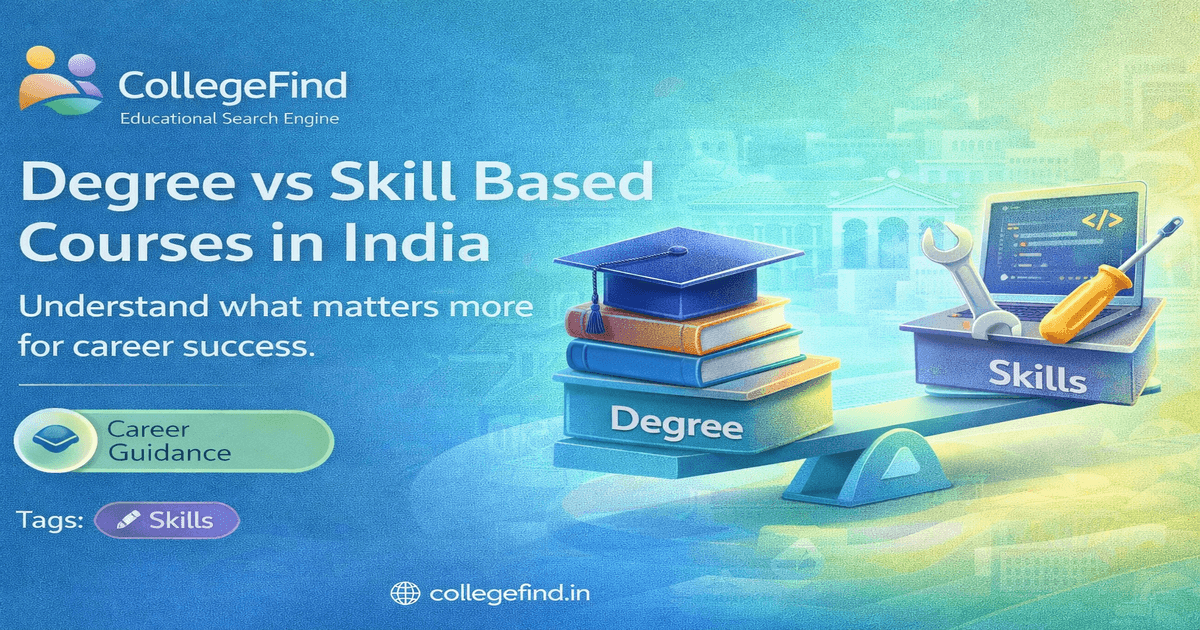
Degree vs Skill Based Courses in India
✍️ Vishal•🗓 1 day ago•⏱ 3 min read
Degree vs Skill-Based Courses in India: What Matters More in 2026?
In today’s fast-changing job market, students in India often face a critical question: should you focus on a traditional degree or pursue skill-based courses? While degrees have long been considered essential for career growth, the rise of the digital economy has shifted the focus toward practical skills.
This detailed guide compares degree-based education and skill-based learning in India, helping you understand what truly matters for your career in 2026 and beyond.
What is a Degree-Based Course?
A degree-based course is a formal academic program offered by colleges and universities. Examples include B.Tech, BBA, BCA, MBBS, and BA.
- Structured curriculum
- Recognized qualification
- Typically 3–4 years duration
Degrees are often required for government jobs, higher education, and certain professional careers.
What are Skill-Based Courses?
Skill-based courses focus on practical, job-ready skills rather than theoretical knowledge. These are often shorter and more flexible.
- Examples: Web development, data analytics, digital marketing
- Duration: Few months to 1 year
- Industry-oriented training
These courses are popular among students who want to enter the workforce quickly.
Key Differences Between Degree and Skill-Based Courses
1. Duration
- Degree: 3–5 years
- Skill Courses: Few months to 1 year
2. Focus
- Degree: Theoretical + academic
- Skill Courses: Practical + job-oriented
3. Cost
- Degree: Higher fees (especially private colleges)
- Skill Courses: More affordable
4. Career Opportunities
- Degree: Required for many traditional roles
- Skills: Preferred in tech and startups
Why Degrees Still Matter
- Mandatory for government jobs
- Required for postgraduate studies
- Provides foundational knowledge
- Recognized globally
Why Skills Are Becoming More Important
- Companies prefer job-ready candidates
- Rapid growth of IT and digital jobs
- Freelancing and remote work opportunities
In many industries, skills now matter more than marks or degrees.
Best Approach: Combine Degree + Skills
The smartest strategy is not choosing one over the other—but combining both.
- Pursue a degree for credibility
- Learn skills for employability
For example, a BCA student learning web development or a BBA student learning digital marketing gains a strong advantage.
Top Skill-Based Areas in India (2026)
- Software Development
- Data Science & Analytics
- Cybersecurity
- Digital Marketing
When Should You Focus More on Skills?
- If your college has weak placements
- If you want to start freelancing early
- If you are in a tech or creative field
When Should You Prioritize a Degree?
- If your career requires formal education (doctor, lawyer, engineer)
- If you plan for higher studies
- If you want government job opportunities
Common Myths
- “Degree is useless” – False
- “Skills alone are enough for all careers” – False
Both have their importance depending on your career path.
Final Thoughts
In India’s evolving job market, both degrees and skills play a crucial role. A degree provides credibility, while skills ensure employability.
The best strategy is to build a strong combination of both to secure long-term career success.
📩 Get College Updates Weekly
Stay updated with colleges, exams & career opportunities.